Plant Reproduction and Growth
Matthew Williams
||6 min read|CSEC BiologyFlowering PlantsGerminationPollinationSection B
Seed structure, germination conditions, flower structure, insect and wind pollination, fertilisation in plants, and fruit and seed dispersal.
Flowering plants reproduce sexually using flowers, and disperse their offspring as seeds enclosed in fruits.
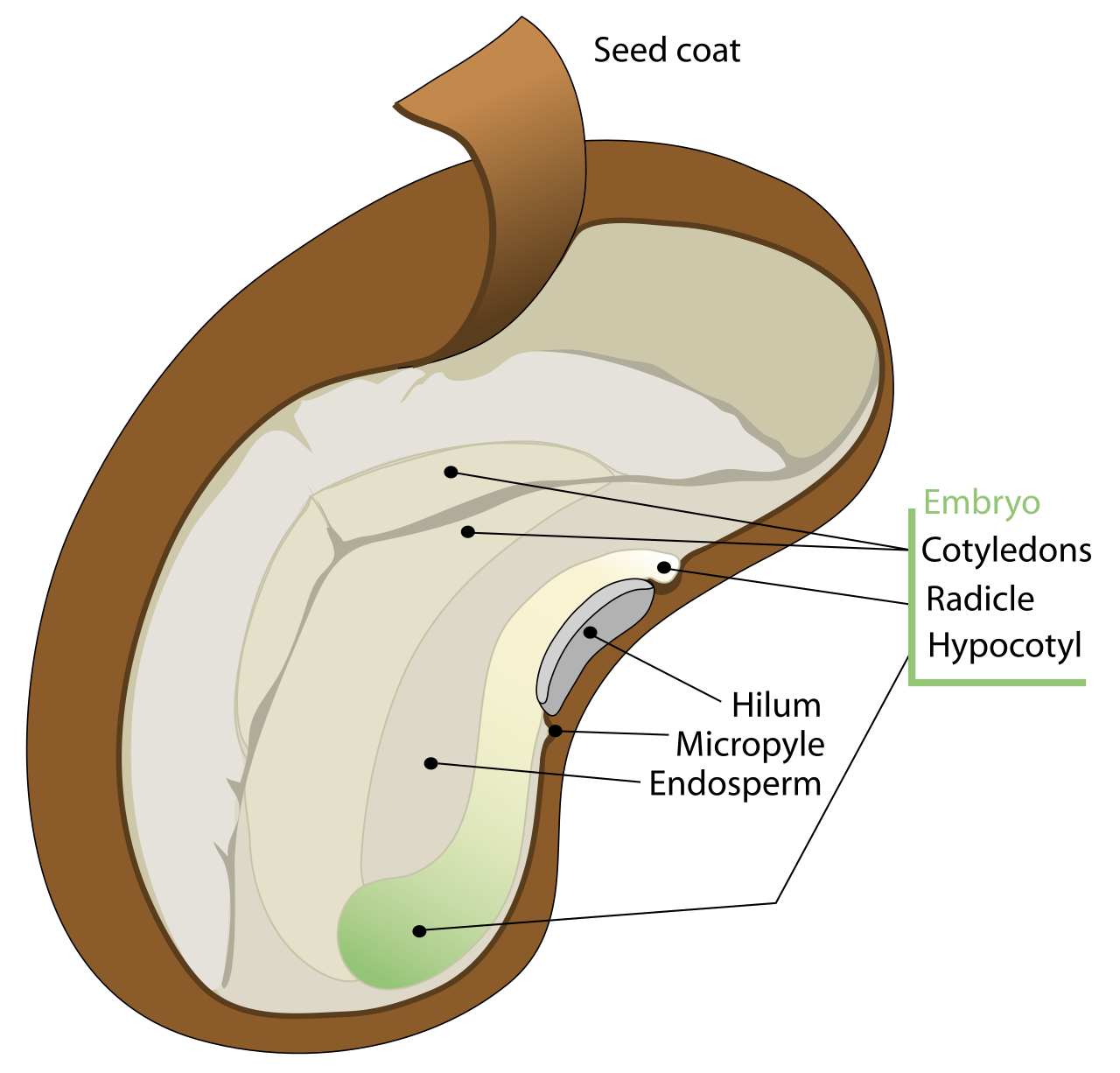
Seed Structure (Dicotyledonous)
A seed contains a plant embryo and food stores, protected by a seed coat.
| Part | Function |
|---|---|
| Testa | tough outer coat; protects embryo from drying out and physical damage |
| Micropyle | small pore in testa; allows water uptake at germination |
| Hilum | scar where seed was attached to the pod |
| Cotyledons (seed leaves) | store food (starch, oils, proteins) for the germinating seedling |
| Radicle | embryonic root; grows downward (positive geotropism) |
| Plumule | embryonic shoot; grows upward (negative geotropism) |
Germination
Germination is the resumption of growth by the embryo after a period of dormancy.
Conditions required:
- Water — rehydrates the embryo; activates enzymes that break down food stores; needed for cell expansion
- Oxygen — for aerobic respiration to supply energy for growth
- Warmth (suitable temperature) — enzymes work at their optimum rate; most seeds germinate between 10–30°C
InfoHelpful but not required: light and germination
Light is not required for germination itself: many seeds germinate underground in darkness. The useful distinction is that light is not needed to restart embryo growth, but it becomes important once the seedling emerges because the young shoot needs light for photosynthesis.
During germination: starch and oils in cotyledons are converted to glucose → used in respiration and for building new cells → radicle emerges first, anchoring the plant, then plumule grows upward.
What Happens Inside a Germinating Seed
Past papers often ask for the sequence of events during germination or for explanations of food-store graphs. The main events are:
- Water enters through the micropyle and rehydrates the seed.
- Enzymes become active and digest stored food in the cotyledons.
- Starch is broken down into sugars such as glucose for respiration.
- Proteins may be broken down into amino acids for making new cells.
- The radicle emerges first, followed by the plumule.
As a seed germinates, stored starch and protein usually decrease because they are being digested and used for respiration and growth. Sugar may rise at first because starch is being converted into soluble sugars, then fall as the seedling respires it.
Exam Tip
If asked to list factors affecting germination, the safest four are water, oxygen, suitable temperature, and seed viability. Pollution, salinity, disease, or damaged seeds can also reduce germination in investigation questions.
Flower Structure
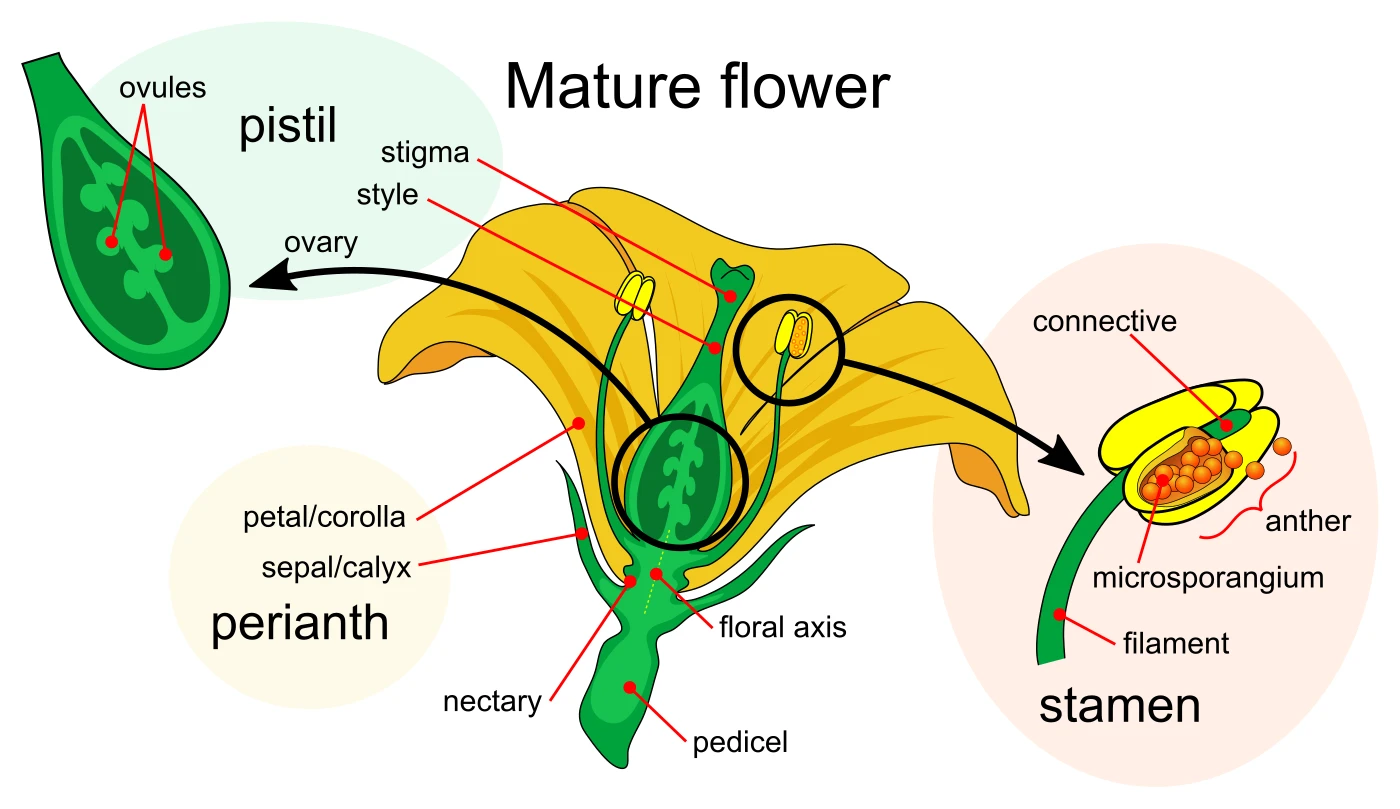
Flowers are the reproductive organs of flowering plants. Parts and their functions:
| Part | Function |
|---|---|
| Sepals | protect the flower bud before it opens |
| Petals | attract insect pollinators (usually coloured and scented) |
| Stamens (filament + anther) | male part; anther produces pollen grains (contain male gametes) |
| Carpels (stigma + style + ovary) | female part; ovary contains ovules (contain female gametes) |
| Nectary | produces nectar to attract insects |
| Receptacle | supports all floral parts |
Insect-pollinated vs Wind-pollinated Flowers
| Feature | Insect-pollinated | Wind-pollinated |
|---|---|---|
| Petals | large, colourful, scented | small, dull, no scent |
| Pollen | sticky, spiky (catches on insect) | smooth, light (carried by wind) |
| Stamens | inside flower; held firmly | long, hanging outside flower |
| Stigma | sticky; inside flower | feathery; hanging outside to catch pollen |
| Nectar | yes | no |
| Pollen quantity | smaller amounts needed | huge quantities produced |
| Example | hibiscus, bougainvillea | grass, corn |
Pollination and Fertilisation
Pollination is the transfer of pollen from the anther of one flower to the stigma of the same or another flower of the same species. It is carried out by insects or wind.
| Type | Description | Advantage |
|---|---|---|
| Self-pollination | pollen transferred from anther to stigma of the same flower or another flower on the same plant | ensures seed production without a partner; useful in isolated plants |
| Cross-pollination | pollen transferred between flowers of different plants of the same species | promotes genetic variation in offspring; generally produces healthier plants |
Fertilisation is the fusion of male and female gametes. After a pollen grain lands on the stigma, a pollen tube grows down through the style into the ovary, and the male gamete travels down the tube to fuse with the female gamete in the ovule.
Remember
Pollination ≠ fertilisation. Pollination is just the transfer of pollen. Fertilisation is the actual joining of gametes, which happens later inside the ovary.
Fruit and Seed Dispersal
After fertilisation, the ovary wall develops into a fruit and the ovule becomes a seed. Dispersal moves seeds away from the parent plant, reducing competition.
| Dispersal method | Adaptations | Examples |
|---|---|---|
| Wind | light; wings (samaras) or parachute hairs (pappus) | dandelion (parachute), ash and elm (wing), poppy (pepper-pot capsule) |
| Animal (external) | hooks, hairs, or sticky coating attach to fur or clothing | goosegrass, sweethearts |
| Animal (internal, eaten) | brightly coloured fleshy fruit attracts animals; tough seed coat survives gut | gooseberry, honeysuckle, papaya, mango |
| Water | large buoyant husk; waterproof outer layer | coconut, water lily |
| Explosive (self-dispersal) | pod wall dries, twists, and splits violently — flings seeds outward | Pride of Barbados, lupins, cotton |